
Farm Buildings That Protect Livestock and Equipment
Agricultural Insulation in Tyndall for barns and outbuildings exposed to temperature extremes year-round
Temperature swings stress livestock confined in uninsulated barns during South Dakota winters when overnight lows remain below zero for weeks and summer afternoons push interior temperatures above ninety degrees in metal buildings without thermal protection. Mighty Mo Foam Co. applies spray foam insulation in agricultural structures where maintaining moderate interior conditions reduces animal stress, prevents equipment damage from condensation, and protects stored feed from temperature-driven moisture cycling that accelerates spoilage. The service applies to dairy barns needing consistent milking parlor temperatures, machinery sheds housing sensitive electronics and hydraulics, and commodity storage buildings where grain and hay quality depend on controlling humidity and heat buildup.
Agricultural applications require durable insulation that adheres to metal panels and pole barn framing without sagging or deteriorating when exposed to dust, ammonia, and the physical impacts typical in working farm environments. Spray foam forms a rigid layer that seals wall and roof surfaces against air infiltration while adding structural stiffness to metal panels that would otherwise flex and leak air at seams and fastener penetrations.
Arrange a site visit to evaluate your farm buildings and determine which structures benefit most from insulation installation.
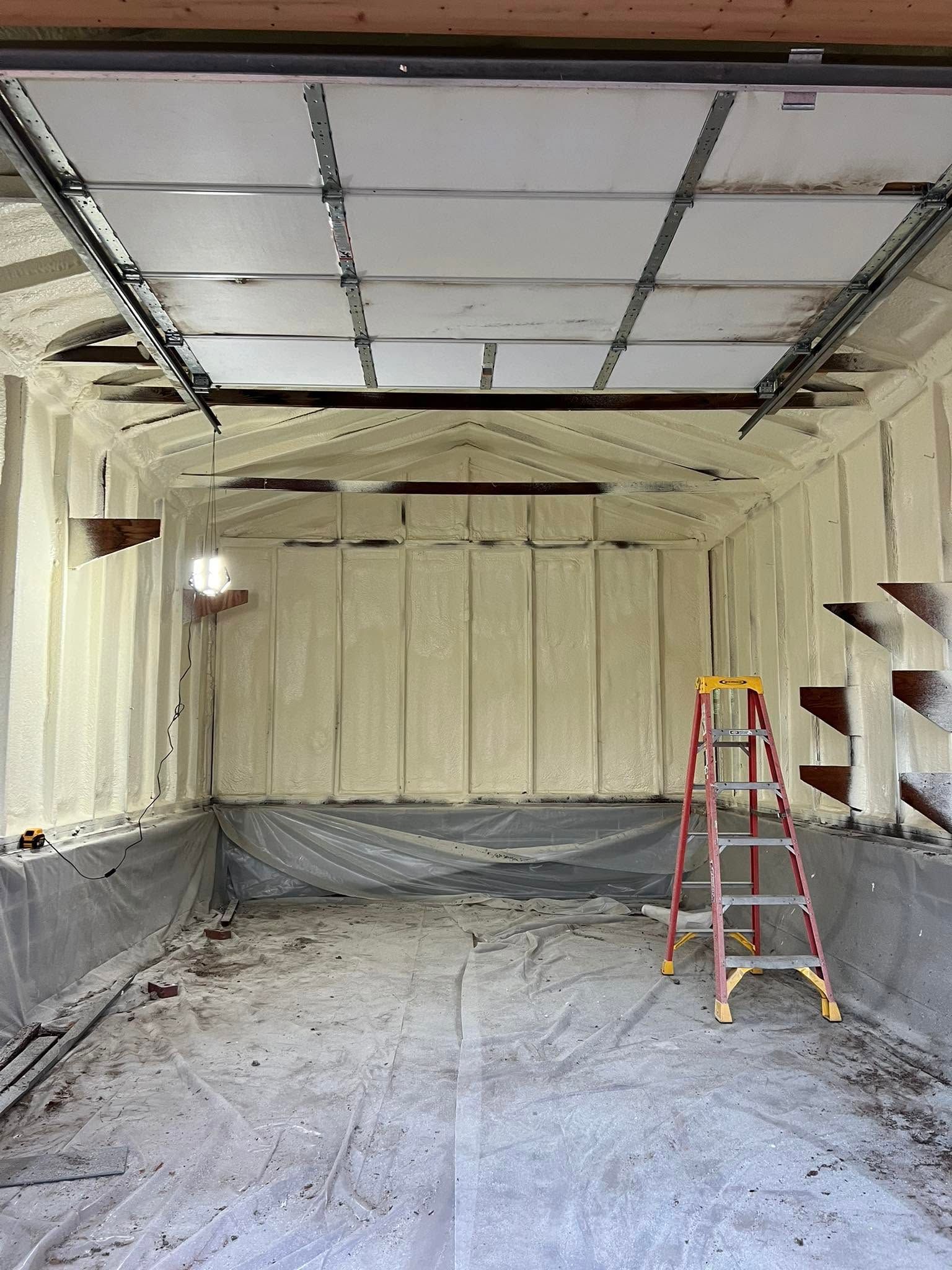
What Changes After Insulation Prevents Temperature Changes
Insulated agricultural buildings maintain interior temperatures within a narrower range throughout the day, preventing the rapid heat loss that occurs overnight in uninsulated structures and the solar gain that turns metal buildings into ovens during summer afternoons. The foam application eliminates condensation that forms on cold interior surfaces when warm, moist air from animals and equipment contacts uninsulated metal, which otherwise drips onto livestock, corrodes machinery, and saturates bedding materials.
You notice calmer livestock behavior because animals expend less energy regulating body temperature in insulated barns, and equipment remains operable during cold weather because hydraulic fluids and batteries stay within functional temperature ranges instead of chilling overnight. Feed quality improves when storage areas avoid the humidity swings that encourage mold growth in hay and grain bins, extending the useful life of stored commodities and reducing waste from spoilage.
Insulation alone does not provide mechanical heating or cooling—farm buildings still experience temperature changes based on outdoor conditions and internal heat loads from animals and equipment, but the rate of change slows and the interior temperature extremes moderate compared to uninsulated structures. Operations requiring precise climate control need supplemental heating or ventilation systems sized to work with the insulated envelope rather than compensating for continuous heat loss through building surfaces.
Questions Before Starting Your Project
Farm operators considering insulation for agricultural structures typically ask about material durability, application constraints, and how the investment affects animal performance and building longevity.
What makes spray foam suitable for agricultural buildings?
The material bonds directly to metal panels and wood framing without requiring additional fastening, remains intact despite vibration and impacts from equipment and animals, and resists degradation from airborne ammonia and moisture present in livestock housing environments.
How does insulation affect ventilation requirements in barns?
Sealed buildings require intentional air exchange through ridge vents, sidewall inlets, or mechanical fans to remove moisture and gases produced by livestock—insulation reduces heating and cooling loads but does not eliminate the need for fresh air circulation to maintain animal health.
When should farm buildings be insulated during construction?
Foam applies to metal buildings after panels are installed but before interior equipment or pens are placed, giving the installer clear access to walls and ceiling surfaces—retrofit applications work around existing interior layouts but may require temporary livestock relocation during application and curing.
How does agricultural insulation withstand power washing and chemical cleaning?
Closed-cell foam resists water absorption and maintains its structure when exposed to pressure washing used to clean milking parlors and livestock areas, though repeated direct spray at close range can erode the foam surface over years of aggressive cleaning.
Why do pole barns lose heat faster than insulated structures?
Open framing and metal siding provide minimal thermal resistance, and air leaks freely through gaps at girts, purlins, and panel overlaps—spray foam seals those connections while adding insulation value that slows conductive heat transfer through the building skin.
Mighty Mo Foam Co. customizes agricultural insulation based on your farm's specific building types and operational requirements. Call (605) 660-8892 to discuss how insulation protects livestock, equipment, and stored commodities in your barns and outbuildings.