
Floors That Stay Warm All Winter
Crawl Space Insulation in Tyndall for properties with cold floors and moisture concerns below living spaces
Cold floors above crawl spaces signal air leakage and missing thermal barriers where outdoor air infiltrates through foundation vents and floor joist bays. Mighty Mo Foam Co. applies spray foam crawl space insulation in Tyndall that seals rim joists, sill plates, and foundation walls, stopping the airflow that makes first-floor rooms uncomfortable during heating season. The work applies to both residential homes and commercial buildings where crawl space conditions affect interior temperature regulation and moisture levels.
Spray foam installation in crawl spaces involves sealing the perimeter foundation walls and rim joist areas where wood framing meets concrete, creating a continuous barrier that blocks outside air from entering the crawl space and migrating upward through floor penetrations. Properly designed systems also address moisture intrusion points, though foam alone does not replace dedicated vapor barriers or drainage solutions where groundwater management is needed.
Arrange an on-site consultation to review foundation access and crawl space moisture conditions.
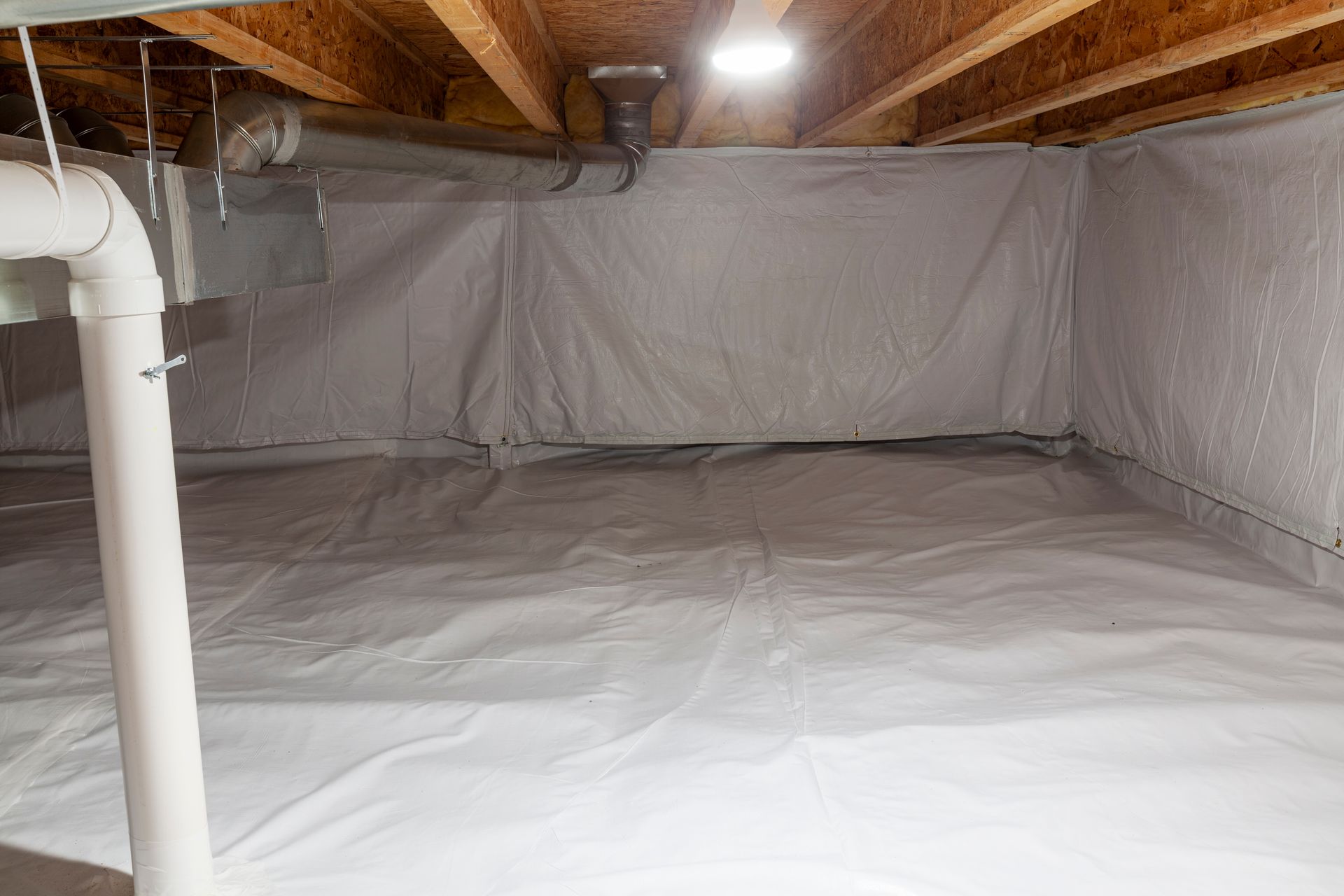
How Crawl Space Sealing Addresses Temperature Loss
The application process targets rim joists and foundation walls rather than the underside of floor joists in most cases, which keeps the crawl space inside the conditioned envelope and prevents freeze risk to plumbing lines that run through the space. Closed-cell foam adheres to concrete foundation walls and wood framing, forming an air and moisture barrier that stops convective heat loss and reduces relative humidity fluctuation in the crawl space environment.
You notice warmer floors immediately after the work is complete, particularly in rooms above exterior foundation walls where cold air previously entered through unsealed rim joists. Furnace runtime decreases because heated air no longer escapes through floor gaps into the crawl space, and drafts along baseboards disappear. The crawl space itself stays warmer in winter, which protects water lines from freezing and reduces the temperature differential that drives condensation on cold surfaces.
The service includes air sealing but does not replace foundation repair, sump pump installation, or exterior drainage corrections if water intrusion originates from grading or subsurface sources. Decisions about whether to encapsulate the crawl space fully or leave vents operational depend on local moisture patterns and whether mechanical dehumidification will be added.
Common Questions About This Service
Property owners typically ask about crawl space foam applications before starting work, especially regarding how the approach differs from traditional fiberglass batt installation between floor joists.
What is the difference between sealing the foundation walls versus insulating the floor joists?
Sealing foundation walls with spray foam keeps the crawl space warmer and protects plumbing from freezing, while insulating floor joists isolates the crawl space as unconditioned space, which can leave pipes vulnerable in Tyndall winters and does not address air leakage at rim joists.
How does spray foam handle crawl space moisture?
Closed-cell foam resists moisture transmission and does not support mold growth, but it does not remove standing water or fix exterior drainage problems—groundwater issues require separate remediation before foam application to prevent trapping moisture against foundation walls.
Why do floors feel cold even when fiberglass batts are installed between joists?
Fiberglass batts do not seal air leaks at rim joists or around floor penetrations, so cold air infiltrates the crawl space and flows upward through gaps around pipes and wiring, creating convective currents that bypass the insulation's R-value.
What preparation does the crawl space need before foam installation?
The space must be accessible for equipment, standing water or active leaks need correction, and any future electrical or plumbing work should be completed first since accessing utilities becomes more difficult after foam encapsulation of rim joists and foundation walls.
When is crawl space insulation most effective in South Dakota?
Installation works year-round, but completing the work before heating season starts delivers immediate comfort improvements and prevents freeze risk to plumbing during subzero winter nights common in Tyndall.
Mighty Mo Foam Co. handles residential and commercial crawl space projects with site-specific assessments that account for moisture conditions and access limitations. Schedule a crawl space evaluation to determine the right approach for your property.