Facilities That Maintain Operational Temperatures
Commercial Insulation in Tyndall for buildings where climate control costs reduce profit margins
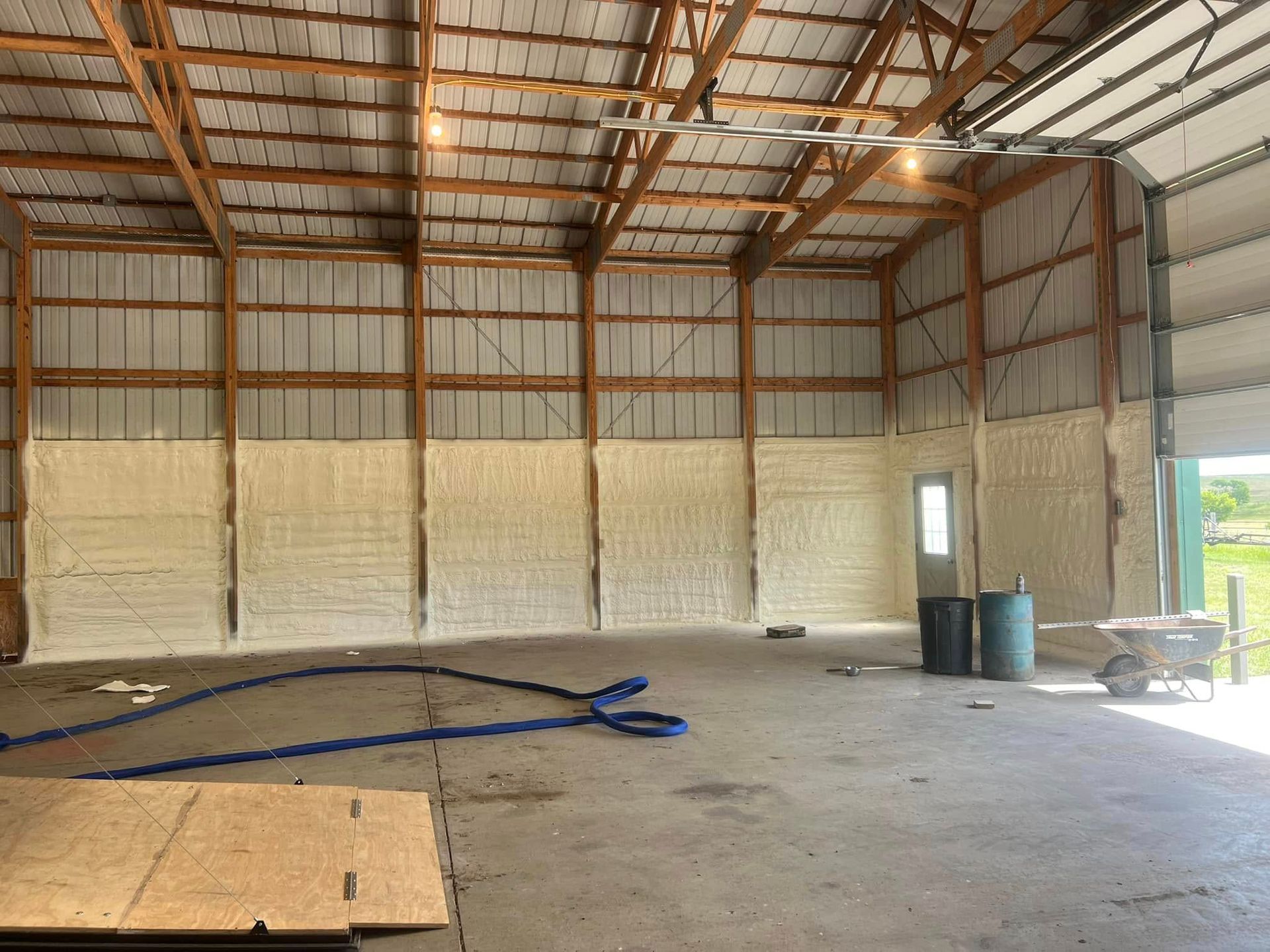
Large floor plans and high ceilings amplify the cost of poor insulation in commercial facilities, where every degree of temperature differential between indoor and outdoor conditions drives up the runtime of HVAC equipment sized to serve retail spaces, offices, warehouses, or service bays. Mighty Mo Foam Co. installs spray foam insulation in commercial structures where building efficiency directly affects operating expenses and occupant comfort. The work applies to new construction before walls are closed in and existing buildings where inadequate thermal barriers result in temperature stratification, condensation on interior surfaces, and mechanical systems that cannot maintain consistent conditions despite continuous operation.
Commercial projects involve evaluating the building's thermal envelope to determine where insulation is absent or insufficient, then applying material that addresses both conductive heat loss through solid assemblies and air infiltration through joints and penetrations in the structure. Spray foam suits commercial applications because it seals irregular framing connections typical in metal buildings and achieves high thermal resistance in wall and roof assemblies where space is limited and performance requirements are strict.
Schedule a facility assessment to review your building's current insulation performance and operating costs.
The Difference Between Adequate and Inadequate Commercial Insulation
Adequate insulation allows HVAC systems to maintain design temperatures without running continuously, preventing the equipment oversizing and energy waste that occur when buildings lose heat or gain it faster than mechanical systems can compensate. The installer applies foam in thicknesses calculated to meet energy codes and the specific performance targets your operation requires, whether you store temperature-sensitive inventory or simply need comfortable conditions for employees and customers during business hours.
After installation, interior surfaces remain close to room temperature instead of radiating cold during winter or heat during summer, and humidity levels stabilize because the sealed envelope prevents moist outdoor air from infiltrating the conditioned space. You spend less on utilities because the building holds its temperature between thermostat cycles, and mechanical equipment lasts longer when it operates within its intended duty cycle rather than running constantly to offset envelope deficiencies.
Insulation does not compensate for undersized or malfunctioning HVAC equipment, nor does it address heat gain from poorly designed lighting or inadequate ventilation systems. Commercial buildings require balanced mechanical design where insulation, air sealing, and climate control equipment all meet the load requirements—improving one component without addressing others may not produce the expected energy savings or comfort improvements.
What Commercial Property Owners Usually Ask
Business operators considering insulation for facilities in Tyndall typically focus on installation logistics, operational disruptions, and return on investment through reduced energy costs.
How does spray foam installation affect business operations?
Work in occupied buildings typically occurs after hours or in phases that isolate sections of the facility, allowing normal operations to continue while installers complete the project—scheduling depends on access requirements and whether the structure can be sectioned off during application and curing.
What insulation thickness do commercial buildings in South Dakota require?
Metal buildings and masonry structures often need four to six inches of closed-cell foam in walls and six to eight inches in roof assemblies to meet current energy codes, though facilities with refrigeration or precision climate control may require greater thermal resistance to maintain design conditions.
How quickly does commercial insulation reduce energy costs?
Buildings with minimal existing insulation see the largest percentage reduction in heating and cooling expenses immediately after installation, while facilities that already have partial insulation experience smaller but still measurable savings as the improved envelope reduces equipment runtime.
Why do large-scale insulation projects use spray foam instead of batts?
Spray foam conforms to steel framing and seals around structural connections in metal buildings without leaving gaps or compressing over time, maintaining consistent thermal performance across wall and roof surfaces that span large distances between supports.
What documentation does the installer provide after completing commercial work?
You receive records showing installed thickness and coverage area for each building section, which may be required for energy compliance verification, building department inspections, or utility rebate applications that incentivize efficiency improvements.
Mighty Mo Foam Co. handles insulation for commercial facilities requiring improved building efficiency and climate control. Contact us to arrange a consultation and review how insulation upgrades will affect your facility's energy consumption and interior conditions.