Walls and Attics Built to Keep Heat In
Insulation Installation in Tyndall for buildings losing conditioned air through unsealed walls and ceilings
Mighty Mo Foam Co. installs insulation in residential, commercial, and agricultural structures where poor thermal barriers result in uneven temperatures and wasted energy. You notice cold spots near exterior walls during winter or rooms that never cool properly despite running air conditioning constantly. The installation addresses gaps in walls, ceilings, attics, and other envelope areas where conditioned air escapes and outdoor temperatures penetrate the building interior.
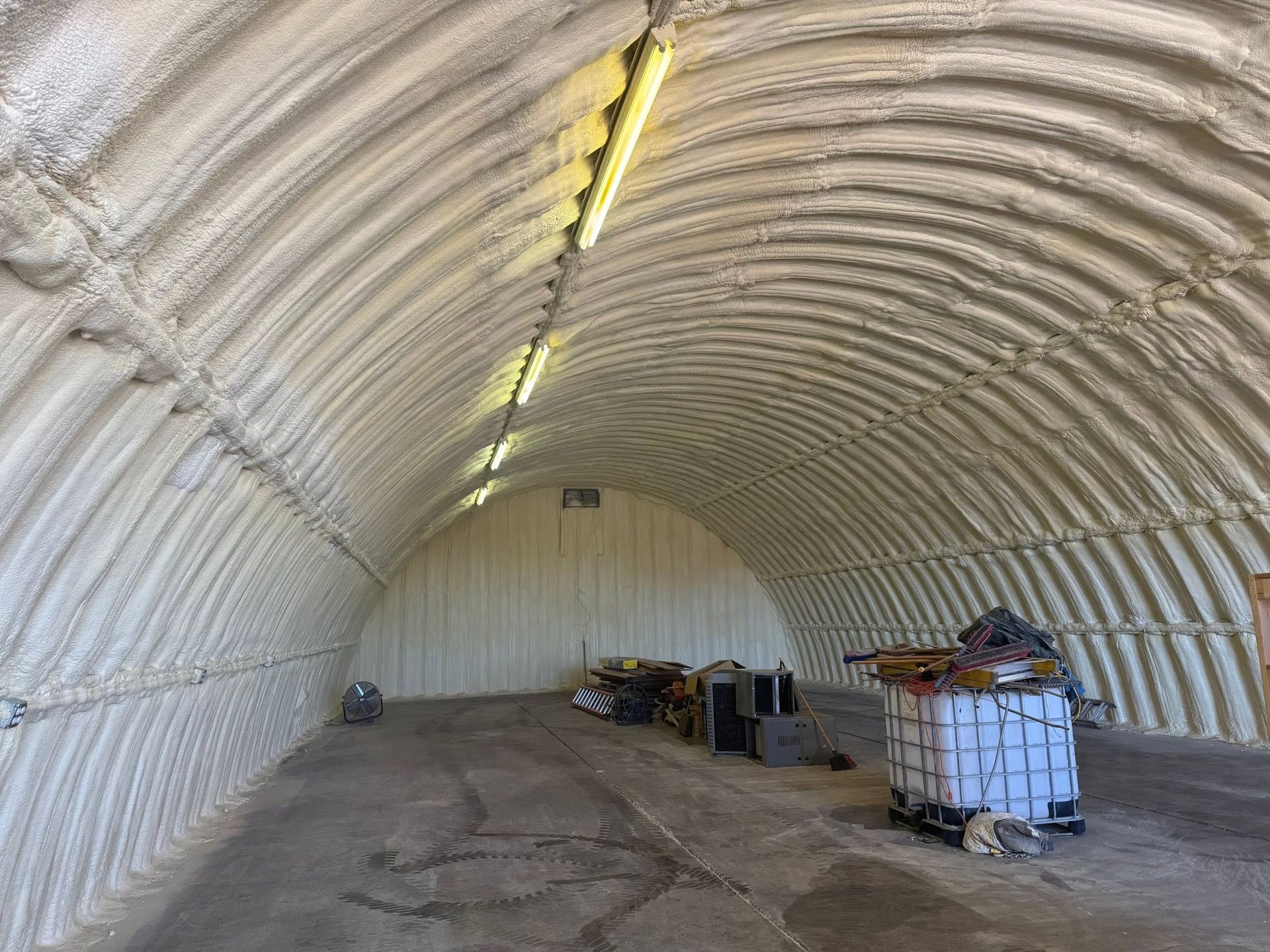
The service involves evaluating your building's current thermal performance, identifying areas where insulation is missing or inadequate, and installing material that fills cavities and creates a consistent barrier between interior spaces and outdoor conditions. Solutions are customized based on the structure type, whether you operate a retail facility requiring uniform temperatures for inventory or a farmstead needing protection for equipment and livestock housed year-round.
Schedule a building assessment to identify specific areas where insulation gaps affect your energy costs.
What Proper Insulation Installation Requires
Installation begins with measuring existing insulation levels and identifying penetrations where air moves freely between interior and exterior spaces. The installer examines wall cavities, ceiling joists, rim joists, and attic floors to determine where material needs placement and what thickness achieves the thermal resistance your building requires based on its use and exposure.
Once the work finishes, you see consistent surface temperatures on interior walls and ceilings instead of cold patches that form condensation or hot spots that radiate heat into living areas. Furnaces and air conditioners cycle less frequently because the building envelope holds conditioned air inside rather than letting it leak through unsealed gaps around framing members and penetrations.
The installation addresses only the thermal barrier itself, not mechanical system upgrades or exterior weatherproofing. If your structure has moisture intrusion from roof leaks or foundation issues, those require separate correction before insulation goes in to prevent trapping water vapor inside wall assemblies where it damages framing and reduces material performance over time.
Questions Before Starting Your Project
Property owners in Tyndall and surrounding areas typically ask about preparation requirements, material options, and what changes they'll notice after the work completes.
What preparation does the building need before insulation installation?
You clear stored items from attic spaces and ensure access to wall cavities where material will be placed, though the installer handles any necessary removal of wall coverings or access panel creation to reach enclosed areas that need insulation.
How does insulation choice depend on the building type?
Residential structures often use batts or blown material in attics where accessibility allows straightforward installation, while commercial facilities with metal framing or agricultural buildings with large open spans may require different approaches that conform to framing patterns and span distances without leaving gaps.
What determines how much insulation an area needs?
Climate conditions in South Dakota require higher thermal resistance values than milder regions, and the building's use affects targets—a shop building where you work daily needs better insulation than a seasonal storage structure that remains unheated most of the year.
When should insulation be installed in new construction?
Material goes in after framing, plumbing, and electrical work finish but before interior wall coverings are installed, giving the installer access to open cavities where insulation fits around pipes and wiring without compressing or leaving voids.
How do you identify whether existing insulation needs replacement?
You notice increased heating or cooling costs compared to previous years, uneven temperatures between rooms, or ice dams forming on roof edges during winter—all indicators that thermal barriers have deteriorated or were inadequate from the start.
Mighty Mo Foam Co. customizes insulation solutions based on your structure's specific requirements and use patterns. Request an on-site evaluation to review current thermal performance and determine where installation will address your building's energy loss.