
Buildings Sealed Against Air Movement
Spray Foam Insulation in Tyndall for structures where air leaks through framing and sheathing connections
Air moves freely through gaps around rim joists, wall plates, and penetrations in buildings without continuous sealing, carrying conditioned air outside and pulling outdoor temperatures in through convection currents that traditional batt insulation cannot stop. Mighty Mo Foam Co. applies open-cell and closed-cell spray foam that expands to fill irregular cavities and adheres to framing members, creating both insulation and an air barrier in a single application. The material addresses thermal loss and infiltration simultaneously, which matters in residential homes where drafts create cold zones and in agricultural buildings where temperature swings stress livestock and compromise stored feed.
The application process involves spraying liquid foam into wall cavities, attic spaces, or onto ceiling decks where it expands and cures into solid insulation that conforms to framing irregularities and seals around pipes and wiring. Open-cell foam provides sound dampening and flexibility at lower density, while closed-cell foam delivers higher thermal resistance per inch and adds structural rigidity to wall assemblies—the choice depends on whether you prioritize maximum insulation value in limited space or need vapor control in below-grade areas.
Arrange an on-site consultation to determine which foam type suits your building's construction and performance requirements.
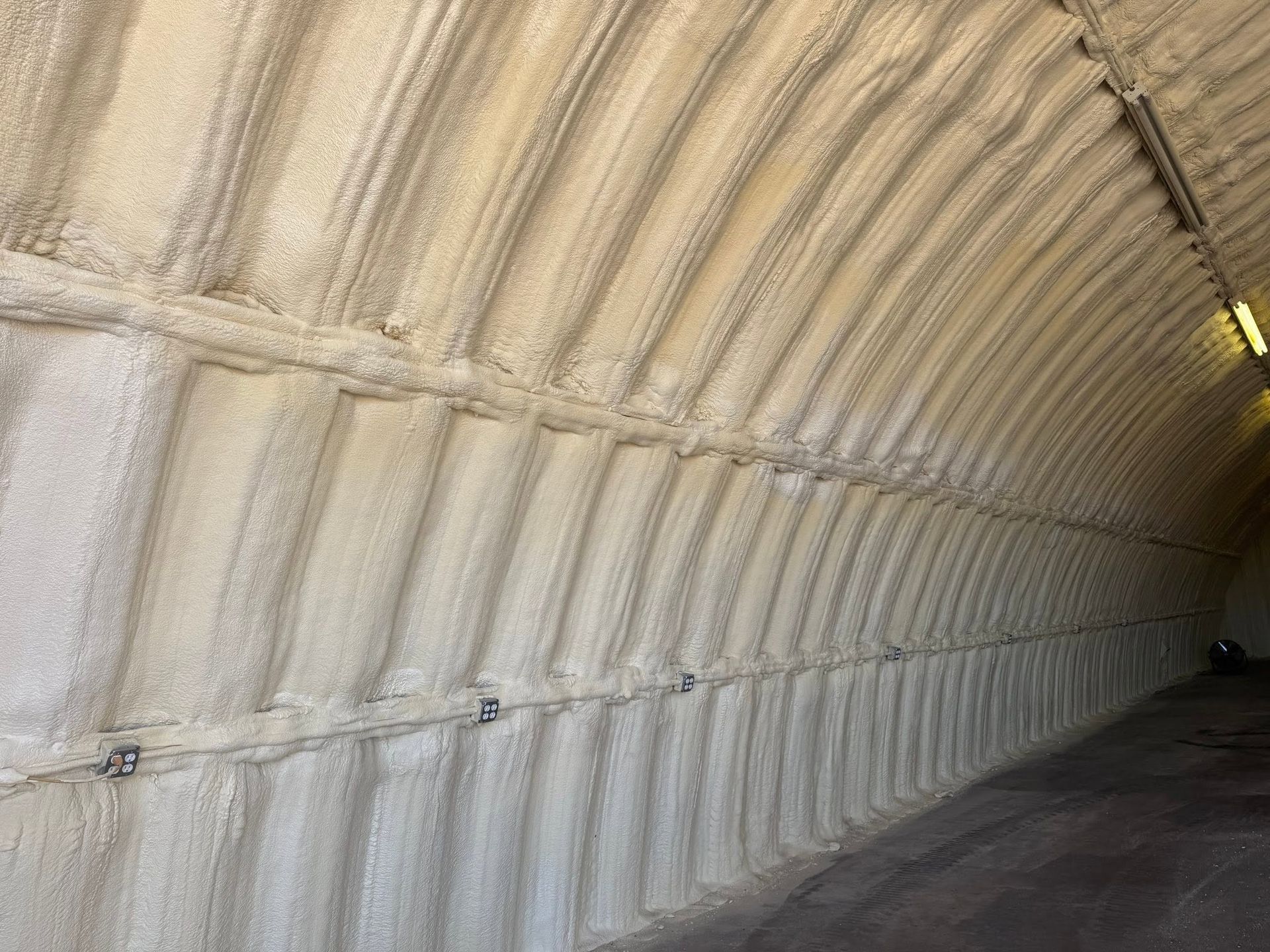
How Spray Foam Addresses Infiltration
Spray foam stops air movement by forming a continuous layer that adheres to all surfaces within the cavity, eliminating the gaps that occur when batts compress around obstacles or settle away from framing over time. The installer applies foam in controlled passes, allowing each layer to expand and cure before adding thickness, building up thermal resistance while maintaining complete contact with studs, joists, and sheathing.
After curing completes, you no longer feel air movement near outlets or along baseboards where wall plates meet flooring, and rooms maintain stable temperatures without the drafts that previously pulled heat away from occupants during cold months. Mechanical systems run for shorter periods because the sealed envelope prevents conditioned air from escaping through the dozens of small penetrations that exist in typical wood-frame construction.
The foam seals the building envelope but does not replace intentional ventilation systems required for indoor air quality. Tightly sealed structures need mechanical ventilation to exchange stale interior air with fresh outdoor air in controlled amounts, unlike older buildings that relied on unintentional leakage to provide air changes throughout the day.
Answers to Frequent Service Questions
Clients considering spray foam for new construction or retrofit projects in Tyndall typically want to understand material differences, application constraints, and long-term performance.
What distinguishes open-cell from closed-cell spray foam?
Open-cell foam expands to roughly three inches per application pass and remains somewhat flexible after curing, while closed-cell foam expands less per pass but delivers approximately double the thermal resistance per inch and forms a rigid layer that resists moisture vapor transmission through wall assemblies.
How does spray foam perform in agricultural buildings with temperature extremes?
The material maintains its structure and insulating properties across the wide temperature range typical in unheated barns during South Dakota winters and metal buildings under direct sun exposure during summer, unlike batts that can sag when subjected to repeated thermal cycling and moisture exposure.
What conditions prevent spray foam application?
Foam requires surface temperatures above 40 degrees and relatively dry substrates to achieve proper adhesion and curing, so work in unheated spaces typically occurs during warmer months unless temporary heating is provided to maintain installation conditions.
How quickly does spray foam cure after application?
Open-cell foam becomes tack-free within minutes and fully cures in hours, while closed-cell foam hardens faster due to its chemical formulation—both allow same-day continuation of other construction activities once the material stops expanding and off-gassing diminishes.
Why does spray foam cost more than batt insulation?
The material itself requires specialized equipment and trained application to achieve consistent density and coverage, and the combined air sealing eliminates the need for separate weatherization steps that would otherwise require additional labor and materials to seal the building envelope.
Mighty Mo Foam Co. applies open-cell and closed-cell spray foam in residential, commercial, and agricultural structures throughout the region. Contact the office to discuss which foam type addresses your building's specific air sealing and insulation needs.