Buildings Designed for Long-Term Performance
New Construction Insulation in Tyndall for residential, commercial, and agricultural projects requiring continuous thermal barriers
New construction offers the opportunity to install spray foam insulation before drywall and finishes go up, creating a continuous air and thermal barrier without the access limitations and retrofit complications present in existing buildings. Mighty Mo Foam Co. provides new construction insulation services in Tyndall for residential homes, commercial structures, and agricultural buildings where spray foam installation during the construction phase supports long-term energy efficiency and occupant comfort. The work integrates with framing, mechanical, and electrical rough-in stages to ensure insulation does not interfere with other trades while delivering maximum envelope performance.
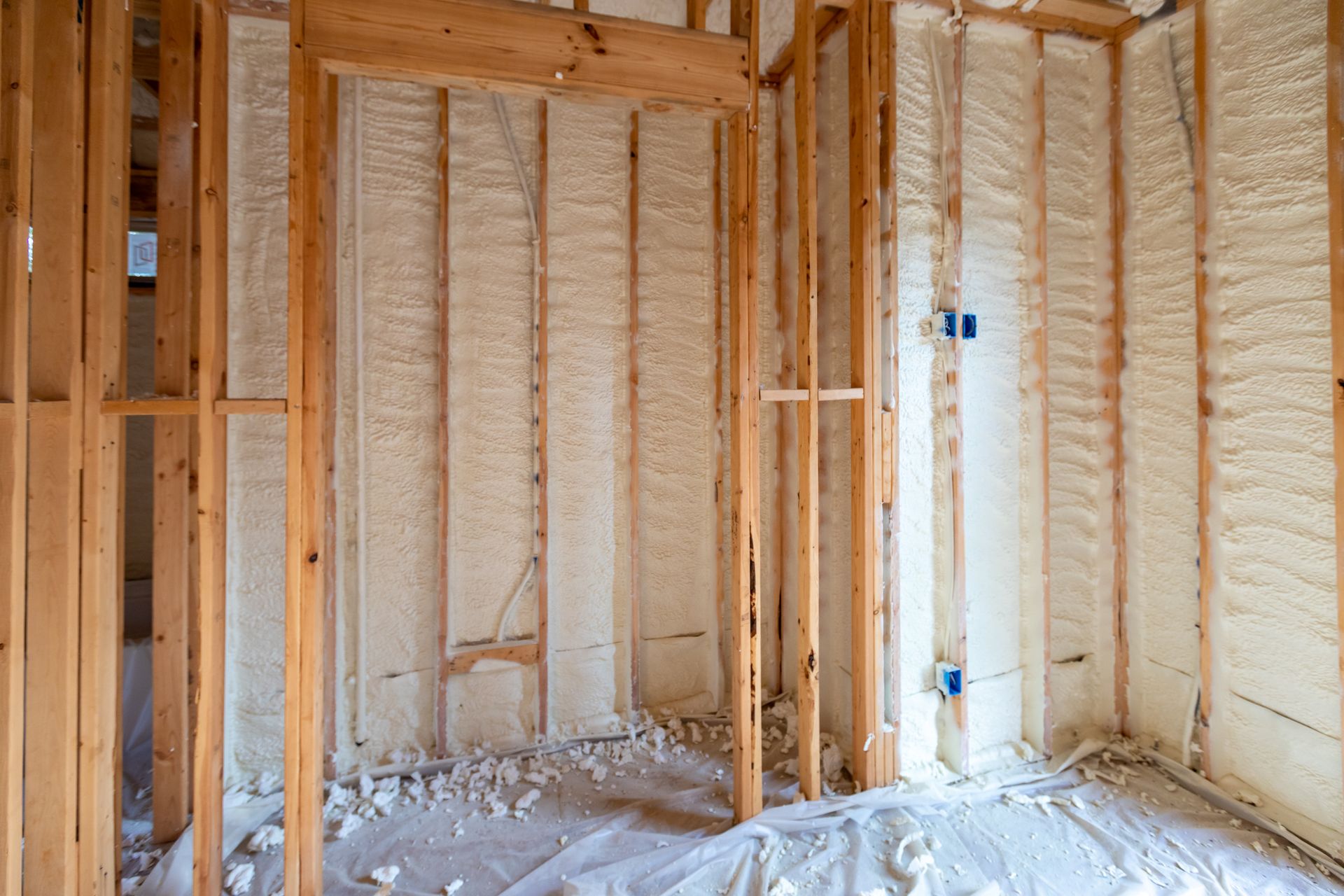
Installation happens after framing, roofing, and rough plumbing and electrical work are complete but before drywall installation, allowing full access to wall cavities, ceiling assemblies, and rim joist areas. Spray foam is applied directly to exterior sheathing and roof decking, expanding to fill stud bays and rafter spaces while sealing gaps around windows, doors, and penetrations that would otherwise remain as thermal bypasses in the completed building.
Arrange a project consultation to review insulation specifications and construction scheduling requirements.
What Changes After Spray Foam Installation
Spray foam installation in new construction creates an airtight building envelope that stops convective heat loss and air infiltration before the structure is enclosed. The foam adheres to framing lumber, OSB sheathing, and roof decking, forming a monolithic barrier that does not settle, sag, or leave voids the way batt insulation can when installed imperfectly. Customized insulation plans address specific R-value targets for walls, ceilings, and floors based on building use, occupancy patterns, and energy code requirements.
Once the building is complete and occupied, occupants experience consistent temperatures across all rooms without the hot and cold spots common in structures insulated with traditional methods. HVAC equipment sized appropriately for the sealed, well-insulated envelope operates efficiently without oversized capacity to compensate for air leakage. The building maintains interior conditions with less energy input, and exterior noise transmission decreases due to the air sealing properties of spray foam, which blocks sound infiltration pathways as effectively as it stops airflow.
The service covers residential, commercial, and agricultural projects with installation approaches tailored to building type and performance goals. Spray foam does not replace structural sheathing, vapor retarders in specific climate-driven wall assemblies, or mechanical ventilation systems required for code compliance in tightly sealed buildings, though it works in coordination with those components to deliver comprehensive envelope performance.
Questions Before Starting Your Project
Builders and property owners in Tyndall frequently ask about new construction spray foam applications and how the process integrates with construction timelines and other trades.
When during construction does spray foam installation happen?
Foam is applied after the building is enclosed with roof and exterior sheathing and after rough electrical, plumbing, and HVAC work is complete, but before insulation inspection, drywall installation, and interior finishes, ensuring all penetrations are sealed and mechanical systems are in place.
How does spray foam affect construction scheduling?
Installation requires dry conditions and temperatures within the foam manufacturer's application range, and the building must remain ventilated during and after application until curing is complete, which typically adds one to two days to the schedule depending on project size and weather conditions.
What R-values are appropriate for new construction in South Dakota?
Wall and ceiling R-value targets depend on energy code requirements and performance goals, with closed-cell foam delivering higher R-value per inch in constrained assemblies and open-cell foam providing cost-effective coverage in deeper cavities where space allows lower-density insulation.
Why choose spray foam over fiberglass or blown insulation for new construction?
Spray foam combines air sealing and insulation in a single application, eliminating the separate air barrier steps required with fibrous insulation, and it does not settle or degrade over time, maintaining designed R-value performance throughout the building's lifespan without callbacks for insulation voids or compression.
What coordination is required with other trades before foam installation?
Electricians and plumbers must complete rough-in work and confirm all boxes, pipes, and vents are positioned correctly, since accessing those systems becomes difficult after foam encapsulation, and HVAC contractors should verify duct placement and register locations before insulation covers framing cavities.
Mighty Mo Foam Co. works with builders, contractors, and property owners to coordinate new construction insulation with project schedules and performance specifications. Request a project planning session to review insulation options and integration with your construction timeline.